
Quick answer: Cwbiancavoyage is an approach to stress-free travel built on one simple idea: prepare for the important things, but do not plan every minute. Instead of collecting random travel hacks, you build a repeatable system covering trip purpose, destination research, budgeting, smart booking, light packing, document backup, and flexible daily plans. This guide explains exactly how to use the cwbiancavoyage method step by step, so your next trip — a weekend break, a family holiday, or a long international journey — feels organized instead of overwhelming.
If you searched for “cwbiancavoyage,” you have probably seen it described online as an easy-travel planning method or travel platform. Let’s be honest up front: it is not a household name like the big booking sites, and much of what is written about it comes from travel blogs describing the same core concept — a simpler, calmer way to plan trips. That is fine. You do not need a famous brand name to travel better. What follows is a complete, practical guide to the cwbiancavoyage method itself: the thinking, the system, and the exact steps you can copy for your next trip.
What Is Cwbiancavoyage?
Cwbiancavoyage describes a travel-planning approach that treats a trip as a system rather than a scramble. The word is used across travel blogs to name a style of travel built on light planning, smart digital tools, and simple repeatable routines. The goal is easy traveling: trips that feel smooth because the important decisions were made early, in the right order, with reliable information.
A successful trip, in this method, balances five things:
- Preparation — preventing avoidable problems before they happen.
- Budgeting — keeping total spending under control, not just the flight price.
- Packing — traveling lighter so movement stays easy.
- Safety — reducing unnecessary risks with backups and awareness.
- Flexibility — leaving room for delays, weather, and happy discoveries.
| Cwbiancavoyage at a glance | What it means in practice |
|---|---|
| Core idea | A repeatable travel system: plan once, reuse the templates, and refine them each trip. |
| Best for | First-time travelers, families, solo travelers, budget travelers, and digital nomads. |
| Trip types | Weekend trips, family holidays, solo journeys, business trips, and international holidays. |
| Main tools | Checklists, saved packing lists, offline maps, booking confirmations in one folder, and budgeting apps. |
| What it avoids | Last-minute decisions, over-packed bags, surprise fees, and hour-by-hour rigid schedules. |
The method fits almost any traveler. Solo travelers get safety routines and document backups. Families get shared plans and realistic daily pacing. Budget travelers get a budgeting system that compares total trip cost instead of headline prices. Digital nomads get a structure that protects work hours while still leaving space to explore. The common thread is simple: small problems are cheapest to fix before the trip, not during it.
The Cwbiancavoyage Easy-Travel Framework
The heart of cwbiancavoyage is a planning order. Most travel stress comes from decisions made in the wrong sequence — booking a non-refundable flight before checking whether hotels in that destination fit your budget, for example, or packing before checking the weather. The framework below runs nine steps in order. You can reuse it for every trip, adjusting only the details.
Step 1: Start With the Purpose of Your Trip
Do not begin by opening ten hotel websites and twenty flight tabs. First, decide why you are traveling. Your purpose shapes almost every later choice:
- Relaxation — prioritize quiet neighborhoods, comfortable stays, and slow days.
- Adventure — prioritize gear, physical preparation, and flexible scheduling around weather.
- Food and culture — prioritize central locations near markets, restaurants, and museums.
- Nature — prioritize access to trails, parks, and early starts.
- Family holiday — prioritize space, kid-friendly pacing, and shared decision-making.
- Romantic break — prioritize atmosphere, privacy, and a few standout experiences.
- Backpacking — prioritize weight, cost control, and transport connections.
- Business — prioritize reliable Wi-Fi, quiet workspaces, and easy airport access.
Someone chasing quiet beaches will not enjoy staying in the busiest entertainment district. Someone interested in museums benefits from staying near the city center even if the room costs slightly more. Choose the experience first, then build the trip around it.
Step 2: Research the Destination Before You Book Anything
Good destination research is the foundation of easy traveling cwbiancavoyage. Short social media videos can inspire, but they routinely skip costs, seasonal conditions, closures, entry rules, and safety concerns. Before paying for anything, check:
- Entry and visa requirements, plus passport validity rules.
- Typical weather during your exact dates — not just the season’s reputation.
- Local public holidays, festivals, and major events (they raise prices and crowds).
- Transportation options between the airport, your area, and key sights.
- Which neighborhoods suit your trip purpose, and which to avoid.
- Local laws, customs, and norms worth respecting.
- Currency, payment options, and whether cards are widely accepted.
- Health requirements and vaccination guidance.
- Current travel advisories for the destination.
- Expected daily costs for food, transport, and activities.
For international trips, official government and embassy sources should take priority for entry, visa, passport, health, and safety information. Rules can change, so recheck critical details shortly before departure rather than trusting an old blog post — including this one.
Step 3: Build a Realistic Travel Budget
A cheap flight does not automatically mean a cheap trip. What matters is the total cost. Build your budget from every category, not just airfare and accommodation:
| Expense category | What to include |
|---|---|
| Flights or trains | Fare, taxes, baggage fees, and seat-selection charges |
| Accommodation | Room rate, taxes, and property charges such as cleaning fees |
| Local transport | Airport transfers, trains, buses, taxis, and rental cars |
| Food and drink | Meals, snacks, drinks, and tips where customary |
| Activities | Attraction tickets, tours, and experiences |
| Connectivity | Local SIM, eSIM, or roaming charges |
| Travel insurance | Coverage matched to your destination and activities |
| Shopping | Gifts and personal purchases |
| Emergency fund | A reserve for unexpected transport, accommodation, or medical costs |
The most common budgeting mistake is comparing headline prices instead of totals. A hotel that costs less per night but requires expensive taxi rides every day may not actually save money. Always compare the full trip cost before committing.
Step 4: Book in the Right Order
Travel becomes much easier when the big decisions land in a logical sequence:
- Confirm passport and entry requirements.
- Choose your approximate dates.
- Research seasonal conditions.
- Compare transportation options and total costs.
- Check accommodation availability and prices.
- Calculate the approximate total trip cost.
- Book major transportation.
- Reserve accommodation.
- Arrange important transfers.
- Book limited-capacity attractions if needed.
- Organize travel insurance where appropriate.
- Save every confirmation in one folder.
Never book a non-refundable flight and only afterward discover that suitable hotels are far above your budget. Look at the whole trip before committing to its most expensive parts.
Step 5: Pack Light With a Reusable System
Packing is a major theme in cwbiancavoyage travel guidance, and for good reason. Every unnecessary item creates work at nearly every stage of a trip: you lift it, organize it, transport it, store it, repack it, and sometimes pay baggage fees for it. Before packing any item, ask one question: will I realistically use this during the trip?
The fix is a saved packing list you tweak instead of rebuilding each time. Start with a base template, then adjust it for weather, trip length, and activities. A solid base list looks like this:
| Category | Typical items |
|---|---|
| Clothing | Versatile outfits that mix and match, weather-appropriate layers, underwear and socks |
| Footwear | Comfortable walking shoes plus one pair for other occasions |
| Toiletries | Travel-size essentials, sunscreen, and a small first-aid kit |
| Documents | Passport, ID, printed or saved booking confirmations, insurance details |
| Tech | Phone, charger, power bank, universal adapter if traveling internationally |
| Health | Prescription medication, basic over-the-counter remedies |
| Day gear | Small day bag, reusable water bottle, sunglasses |
| Comfort | Sleep mask, earplugs, and entertainment for long journeys |
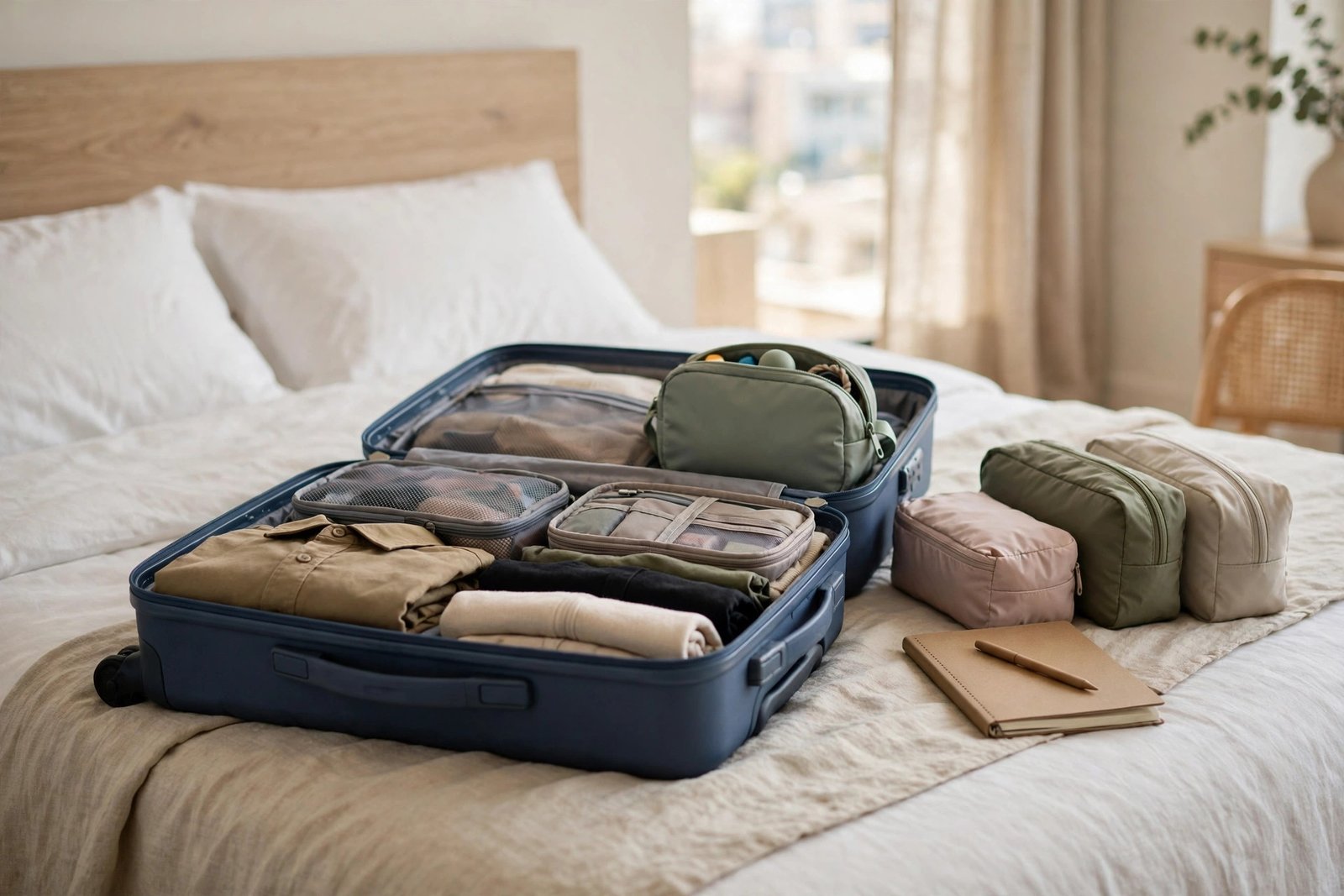
Choose clothes that work together in several combinations instead of one-off outfits. Roll or fold them tightly, keep toiletries in one pouch, and place heavier items near the wheels of a suitcase. If you keep flying budget airlines, weigh your bag at home — their baggage rules are where most surprise fees come from, and you can verify the exact limits on the airline’s own website before you leave.
Step 6: Compare Flights Beyond the Ticket Price
The cheapest fare on a search screen is not always the cheapest journey. Before booking, compare:
- Baggage allowance and fees for your specific fare class.
- Airport location and the cost of transfers into town.
- Departure and arrival times — very early or late flights add hotel-night or transfer costs.
- Layover duration and number of stops; long layovers create extra food or accommodation costs.
- Seat fees, change conditions, and cancellation conditions.
A flight to a distant secondary airport can look cheaper and become more expensive once you add a long train or taxi transfer. Price matters, but convenience has real value, and the cwbiancavoyage approach asks you to weigh both instead of chasing the lowest number on the screen.
Step 7: Choose Accommodation by Location, Not Photos Alone
A beautiful room is far less useful if it creates transport problems every day. Research the neighborhood as carefully as the property itself. Look for accommodation near public transport, the places you plan to visit, food shops, and safe, well-used streets. Read recent guest reviews and look for repeated comments about noise, cleanliness, transport, check-in, and the surrounding area — one-off complaints matter less than patterns.
Promotional photographs show the best angle of the best room on the best day. Reviews written in the last few months show what the place is actually like. For safety, note how the property handles check-in after hours and whether the area feels comfortable to walk in at night.
Step 8: Build a Flexible Itinerary
One of the fastest ways to make a trip exhausting is to schedule every hour. Instead, identify a few priorities. For each day, plan one main activity, one optional activity, time for meals, travel time, rest time, and unplanned time. On a four-day city trip, pick the experiences you would be disappointed to miss and add others only when time and energy allow.
This creates breathing room for delays, weather changes, and unexpected discoveries — the slow coffee in a side street, the viewpoint you find by accident. Use a map to group nearby attractions together before you leave, so you are not crisscrossing the city all day. Mark your accommodation, key sights, stations, pharmacies, and the airport or train station; then cluster each day’s plans by area. Visiting places in the same zone cuts both travel time and transport costs.
Step 9: Prepare Your Documents, Phone, and Airport Day
Searching through old emails at an airport counter is unnecessary stress. Create one secure travel folder — digital, printed, or both — before leaving, containing copies or details of your passport, visa where required, flight and hotel bookings, insurance information, transport reservations, tour confirmations, and emergency contacts.
Prepare your phone the night before: download offline maps, save accommodation details and tickets, install the airline or transport apps you will need, check roaming costs, and research local SIM or eSIM options. Do not rely completely on mobile internet — phones lose signal, batteries die, and accounts can become temporarily inaccessible. For the important things, redundancy is the point.

For the airport itself, confirm the departure airport and terminal, complete online check-in where available, review baggage limits, and give yourself enough time for check-in, security, immigration where applicable, and finding the gate. Required arrival time varies by airport, airline, and flight type, so follow current guidance for your specific journey rather than one universal rule.
Cwbiancavoyage vs Old-School Trip Planning
To see what the method actually changes, compare it against the way many people still plan trips:
| Old habit | Cwbiancavoyage approach | Why it matters |
|---|---|---|
| Book the cheapest flight first | Compare total trip cost before booking anything major | Avoids trips that are “cheap” on paper and expensive in reality |
| Start packing the night before | Keep a saved packing list you tweak each trip | Less forgotten gear, lighter bags, no last-minute panic |
| Plan every hour in advance | One main activity per day, rest built in | Energy survives the whole trip; delays do not destroy the plan |
| Trust one influencer’s video | Cross-check costs, entry rules, and advisories with official sources | Avoids closures, surprises, and safety problems |
| Keep documents in scattered emails | One travel folder with offline copies | Immigration, check-in, and emergencies stay manageable |
| Use taxis for everything | Learn the local transport system before arriving | Much lower daily costs and more confident movement |
None of these changes is dramatic on its own. That is the point. Easy travel is rarely created by one clever trick; it comes from several small decisions made in the right order.
Tools That Fit the Cwbiancavoyage Method
The method does not require any single app or service — be wary of articles that insist you must download one specific product, since the niche around this keyword sometimes includes thin promotional content. What matters is that your tools cover these jobs:
| Job | What to look for | How to verify it works for you |
|---|---|---|
| Flight and hotel comparison | Shows total price including taxes and fees before checkout | Compare the same trip on two platforms; if totals differ wildly, read the fee breakdown |
| Itinerary tracking | Pulls bookings into one timeline you can share | Test it with one trip before relying on it for an important one |
| Offline maps | Works without data and includes transit layers | Download your destination’s map at home and open it in airplane mode |
| Budget tracking | Logs spending by category with alerts | Enter one day of real spending to see if the categories fit your trip |
| Translation | Camera translation and offline language packs | Download the language pack before departure, not at the airport |
| Connectivity | eSIM or local SIM with clear data limits | Check your phone is eSIM-compatible and unlocked before you travel |
| Document backup | Encrypted cloud folder plus offline copies | Open the folder on a second device to confirm everything is readable |
Keep the toolset small. Five apps you actually use beat fifteen you forget about. The cwbiancavoyage idea is light planning — a sprawling app stack works against it.
Safety and Backup Systems Every Traveler Needs
Safety in the cwbiancavoyage method is mostly unglamorous preparation:
- Documents: keep passport photos and booking copies in your phone and in cloud storage, plus one printed set kept separately from the originals.
- Money: carry two payment methods from different networks where possible, and know the local emergency number — it is not 911 everywhere.
- Location sharing: share your itinerary and accommodation address with someone at home, and agree on a check-in rhythm.
- Advisories: read the official travel advisory for your destination before departure and again a day or two before flying.
- Insurance: match coverage to the trip — medical coverage for international travel, activity coverage if you will hike, dive, or ride.
- Health: note the nearest hospital or clinic to your accommodation and keep prescription details accessible.
Solo travelers should add a few extra layers: arrive in new cities during daylight when possible, keep your phone charged and topped up with data, and trust the rule that if a situation feels wrong, leaving early is always the right call. None of this requires fear — it requires ten minutes of setup at home.
Cwbiancavoyage for Families and Group Travel
Groups add one variable solo travelers never face: other people’s preferences. The cwbiancavoyage method handles this with shared planning rather than endless group chats:
- Decide together, early. Agree on trip purpose, budget range, and dates before anyone books anything. Most group-trip arguments come from assumptions made in silence.
- Share one itinerary document. One shared file with dates, bookings, costs, and daily plans beats fifty scattered messages. Everyone can see the same version of the trip.
- Vote on the big choices. Let the group pick accommodation and the main activities; leave meals and free time individual. Consensus on the expensive decisions prevents resentment.
- Pace for the slowest traveler. With kids or older relatives, plan shorter days with real rest breaks. A trip everyone finishes happily beats an ambitious one half the group resents.
- Split costs transparently. Track shared spending in one place from day one. Money confusion is the fastest way to sour an otherwise great trip.
- Assign roles. One person handles bookings, another handles daily navigation, another handles the document folder. Shared responsibility means no single person carries all the stress.
For families with children, add kid-specific items to the reusable packing list (snacks, entertainment, comfort items), build extra buffer into travel days, and pick accommodation with space to unwind — a tired child in a cramped room can end a day early.
Traveling More Responsibly
The cwbiancavoyage material touches on responsible tourism, and it deserves a clear place in the method. Easy travel should not come at a destination’s expense:
- Respect local rules and customs. Research dress codes, tipping norms, and photography etiquette before you arrive.
- Support local businesses. Eat at locally owned restaurants, hire local guides, and buy from local makers rather than defaulting to international chains.
- Reduce waste. Carry a reusable water bottle and bag, and avoid single-use plastics where the local infrastructure makes that practical.
- Protect fragile places. Stay on marked trails, follow wildlife-viewing rules, and never geotag sensitive natural spots that cannot handle crowds.
- Travel off-peak when you can. Shoulder seasons mean lower prices for you and less pressure on overcrowded destinations.
Digital Nomads: Mixing Work and Travel the Cwbiancavoyage Way
The cwbiancavoyage resources often speak to remote workers, and the method adapts well to work travel because its core discipline — protect the essentials, keep the rest flexible — is exactly what remote work needs. A few adjustments:
- Wi-Fi is an entry requirement, not a bonus. Confirm speeds with recent reviews, not the property’s marketing page, and carry a backup: an eSIM with a generous data plan or a portable hotspot.
- Guard your work hours. Block deep-work time in the itinerary the same way you would block a museum visit, and choose time zones and locations that do not force 3 a.m. calls.
- Pick nomad-friendly bases. Look for reliable internet, coworking spaces, and a community of other remote workers — destinations like Bali, Osaka, and Antalya are frequently cited in cwbiancavoyage-style guides for exactly this mix.
- Keep work gear separate and backed up. Your laptop and its charger travel in your personal item, never in checked baggage, and your work files sync to the cloud before every flight.
- Know the rules. Tourist visas in many countries do not permit local employment; if you are unsure about remote-work rules, check the destination’s official immigration guidance rather than a blog.
The financial upside is real when done carefully: earning while traveling can make longer trips sustainable. The risk is burnout from never separating workdays from travel days — so schedule true days off, not just “light work” days in nicer locations.
Cwbiancavoyage Trip Checklists: Before, During, and After
Turning the framework into a timeline makes it much harder to forget a step. Use these three checklists as your reusable template for every trip:
| Phase | Checklist |
|---|---|
| 4–8 weeks before | Define trip purpose; research destinations, entry rules, weather, and daily costs; build the total budget; compare transport options; check accommodation availability |
| 2–4 weeks before | Book major transport; reserve accommodation; arrange key transfers; book limited-capacity attractions; buy travel insurance; confirm passport validity |
| 1 week before | Tweak the reusable packing list for this trip’s weather and activities; download offline maps and tickets; research local SIM/eSIM; save emergency contacts; share itinerary with someone at home |
| Night before | Confirm airport and terminal; complete online check-in; weigh bags; charge all devices; put documents in an easy-to-reach spot; set two alarms |
| During the trip | Log spending daily; group sights by area; keep one main activity per day; store receipts for insurance claims; keep documents backed up and separated |
| After the trip | Review what the budget actually was vs. the plan; note what the packing list got wrong; save updated templates for the next trip |
That last row matters more than it looks. The cwbiancavoyage method is a repeatable system, and every trip should make the next one’s templates better. A packing list that over-packs winter gear gets trimmed. A budget that underestimated food gets a bigger food line. After three or four trips, your templates become a personal travel system that no app can sell you.
The Method in Action: A Sample 7-Day Trip Plan
Here is what the cwbiancavoyage approach looks like applied to a realistic week-long city trip — say, a first visit to a European capital in spring:
- Day 1 — Arrive and settle: land midday, transfer to a centrally located hotel researched in advance, unpack, take a short evening walk in the immediate neighborhood only. No sightseeing pressure.
- Day 2 — Orientation: one main activity (a guided walking tour or the top museum), one optional activity (a park or market), dinner in the hotel’s district. Sights grouped in one area using the pre-marked map.
- Day 3 — Culture day: the second must-see attraction in the morning when crowds are thinnest, unplanned afternoon, a food experience in the evening — cooking class or a well-reviewed local restaurant.
- Day 4 — Slow day: deliberately light: one neighborhood to wander, cafés, a viewpoint. Buffer for anything delayed earlier in the week.
- Day 5 — Day trip: the one pre-booked excursion (a nearby town or coast), tickets reserved weeks ahead because capacity is limited.
- Day 6 — Catch-up: revisit favorites, shop for gifts, pack gradually in the evening instead of at midnight.
- Day 7 — Depart: leisurely morning, transfer timed with buffer, documents and offline tickets ready from the travel folder.
Notice what is missing: no hour-by-hour schedule, no cross-city dashes, no day with three “must-see” attractions stacked back to back. Each day has one anchor, room to breathe, and everything expensive was booked weeks ago in the right order. That is the cwbiancavoyage method working exactly as designed.
Common Mistakes That Ruin Otherwise Good Trips
Most bad trips are not ruined by bad luck. They are ruined by predictable, fixable mistakes:
| Mistake | What goes wrong | The cwbiancavoyage fix |
|---|---|---|
| Booking before researching | Great flight to a destination in its rainy season, or with entry rules you cannot meet | Research first, book later — in that order, every time |
| Comparing headline prices | Hidden baggage, transfer, and resort fees erase the “saving” | Compare total trip cost, all categories included |
| Overpacking “just in case” | Heavy bags, baggage fees, and time lost repacking | Use the reusable packing list; cut anything without a realistic use |
| Hour-by-hour itineraries | One delay cascades into a ruined day | One main activity per day with buffer time built in |
| Ignoring advisories | Closures, strikes, or safety issues you could have known about | Check official advisories before and just before departure |
| No document backups | A lost passport or dead phone becomes a crisis | One folder: digital, printed, and stored separately |
| Skipping insurance | One medical bill or canceled flight wipes out the trip budget | Coverage matched to destination and activities |
Related Articles
- UStudioBytes: What It Is and How to Download Safely
- What Is Undergrowthgameline? Online Gaming Events Guide
- What Is Severedbytes? AI Writing Platform Guide
Frequently Asked Questions
What does cwbiancavoyage mean?
Cwbiancavoyage is used in travel writing to describe an easy-travel planning method: light planning, smart digital tools, and repeatable routines that make trips feel smoother. It covers trip purpose, destination research, budgeting, booking order, packing, document backup, and flexible daily plans.
Is cwbiancavoyage a company or an app?
The term appears in travel blogs both as a travel-guide concept and, in some articles, as a planning platform. Because it is a niche term rather than a widely documented brand, treat claims about any specific product with care: verify the official website, read independent reviews, and never share payment details with a service you cannot independently confirm.
How much does traveling with the cwbiancavoyage method cost?
The method itself costs nothing — it is a planning system, not a product. Your trip cost depends on destination, season, and travel style. The budgeting steps in this guide (total-cost comparison, off-peak timing, light packing to avoid baggage fees) are specifically designed to cut the expenses travelers most often underestimate: transfers, fees, and last-minute bookings.
How is the cwbiancavoyage method different from normal trip planning?
The main differences are order and restraint. You research before booking, compare total trip cost instead of headline prices, keep a reusable packing list, build one flexible activity per day instead of hour-by-hour schedules, and keep document backups. Each change is small; together they remove most travel stress.
Does easy traveling cwbiancavoyage work for budget travelers?
Yes — budgeting is one of its five pillars. The method pushes you to total-cost comparison, off-peak timing, and light packing, which directly cut the three costs that surprise budget travelers most: baggage fees, transfers, and last-minute bookings.
What should I pack for an easy-travel trip?
Use the reusable packing checklist in this guide as your base: versatile mix-and-match clothing, weather layers, comfortable walking shoes, travel-size toiletries, documents, phone plus charger and adapter, medication, a day bag, and a reusable water bottle. Adjust only for weather, trip length, and activities.
How far in advance should I plan a trip with this method?
There is no single rule, but the method works best when research and budgeting happen before any booking. As a rough guide, start researching several weeks before a domestic trip and a few months before a complex international one, and recheck entry rules, advisories, and weather shortly before departure.
Is the cwbiancavoyage approach good for first-time travelers?
It is especially good for first-timers, because it replaces guesswork with a checklist: research, budget, book in order, pack light, back up documents, and keep daily plans simple. If airports or borders make you nervous, the document folder and arrival-time preparation steps remove most of the uncertainty.
Final Thoughts
Easy traveling cwbiancavoyage is not about a secret app or a magic trick. It is about doing the unglamorous work in the right order: define the trip’s purpose, research honestly, budget the total, book logically, pack light, back up your documents, and leave your days flexible enough to enjoy. Build those habits once, save them as templates, and every future trip gets easier. That is the whole method — and it works whether you are crossing the country for a weekend or crossing the world for a month.